


How to Fix DSC Error on e-Auction Website (2026) – eAuction DSC Setting Complete Step-by-Step Guide
Introduction: The High Stakes of e-Auction Bidding in 2026
eAuction DSC Setting: In today’s fast-paced digital ecosystem, participating in e-Auctions and e-Tenders—whether for bank foreclosures, scrap disposal, coal blocks, or government land—requires precision, speed, and flawless technical compliance. At the very center of this process is your Digital Signature Certificate (DSC). It is your legally binding digital identity, ensuring secure login, non-repudiation, and encrypted bidding.
However, nothing is more frustrating than having the winning bid in mind, only to be stopped by a flashing red error: “DSC Not Detected,” “Java Application Blocked,” or “Signing Certificate Not Showing.” When millions of rupees are on the line, a technical glitch can mean losing a massive business opportunity.
If you are experiencing these problems, take a deep breath. You are not alone. In my decade of experience handling technical issues for portals across India, I see these exact errors every single day. The architecture of e-Auction portals relies on a delicate bridge between your web browser, a Java Runtime Environment (JRE), and the cryptographic drivers of your USB token. When one of these elements is out of sync, the whole system fails.
This guide is the most comprehensive, highly-researched, and battle-tested manual available in 2026. We will walk through every single technical layer to permanently fix DSC errors on any e-Auction website, guaranteeing your system is perfectly calibrated for your next big bid.
Watch Video Guide: Fix DSC Error on e-Auction Website (2026)
If you are still confused or want to follow a step-by-step visual tutorial, we highly recommend watching our complete video guide below.
In this video, we have explained the exact process to fix DSC errors on e-Auction websites, including Java installation, browser setup, and certificate detection.
👉 Important: Do not skip any step in the video, as even a small mistake can prevent your DSC from working properly.
▶️ Complete Video Tutorial
💡 What You’ll Learn in This Video
- How to fix DSC not detecting issue
- Correct Java installation for e-Tender
- Microsoft Edge setup for DSC
- How to handle Java popups
- Complete working solution (2026)
📢 Still Facing Issues?
If your DSC is still not working even after following all steps:
👉 Get instant help on WhatsApp:
https://wa.me/917579984381
Our team will help you fix your issue quickly ✅
Anatomy of a DSC Error – Why Does It Fail?
Before we jump into the solutions, it is crucial to understand why your computer is rejecting the DSC. By understanding the root cause, you transition from simply guessing to expertly diagnosing the issue.
The Triad of e-Auction Authentication
Most e-Auction platforms (like MSTC, Bank e-Auctions, and State Procurement portals) still utilize legacy security architectures that require three components to communicate flawlessly:
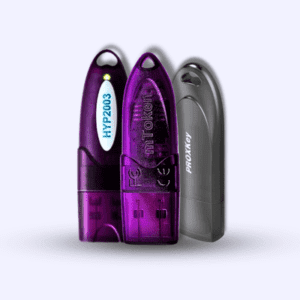
- The USB Cryptographic Token (Hardware): Devices like ePass2003 Auto, ProxKey, or mToken that physically hold your Class 3 Private Key.
- The Java Applet (Middleware): The script on the portal that tries to “read” your USB port.
- The Web Browser (Interface): The software displaying the website, which often tries to block Java for security reasons.
The Most Common Errors You Will Encounter:
- “DSC Not Detected”: The browser cannot communicate with the USB port, usually due to missing hardware drivers or the browser blocking the connection.
- “Java Popup Not Appearing”: The website’s script is being killed by your browser’s modern security protocols, or the Java installation is corrupted.
- “Signing Certificate Not Showing”: The system sees the USB token, but it cannot extract the public key. This happens if the certificate has expired, or if there is a conflict between 32-bit and 64-bit Java versions.
- “Application Blocked by Java Security”: Java is installed and running, but its internal security settings are actively preventing the e-Auction portal from executing its scripts.
- “Error Code 0x80090016 / Keyset does not exist”: A deep Windows cryptographic error indicating a communication failure between the token driver and the Windows Certificate Store.
The Ultimate Pre-Requisite Checklist
Before making any system changes, ensure you have the following prerequisites ready. Skipping these will render the troubleshooting steps ineffective.
- Administrator Access: You must have full Administrator privileges on your Windows PC. Standard user accounts cannot alter Java environment variables or install global drivers.
- Stable Internet Connection: A fluctuating connection can cause the Java applet download to time out mid-execution.
- Valid Class 3 DSC: Ensure your DSC is actually valid. Open your Token Manager software, log in, and verify the “Valid From” and “Valid To” dates. A revoked or expired DSC will instantly throw an error.
- Windows OS: While some workarounds exist for Mac, 99% of Indian e-Auction portals are strictly optimized for Windows 10 and Windows 11.
Step-by-Step Resolution Masterclass
Follow these steps exactly in the order they are presented. Do not skip ahead.
Step 1: Purging the System (Uninstall Old Java Versions)
Having multiple versions of Java on your computer is the #1 cause of DSC conflicts. The portal doesn’t know which version to call upon, resulting in a silent crash.
- Click the Windows Start Menu.
- Type Control Panel and press Enter.
- Under the “Programs” category, click Uninstall a program.
- Scroll down to the “J” section and look for Java.
- If you see Java 8 Update 51, Java 8 Update 201, Java 11, etc., right-click and Uninstall every single one of them.
- Expert Tip: Also check your
C:\Program Files\JavaandC:\Program Files (x86)\Javafolders. If they still exist after uninstallation, delete the folders manually to remove all residual cache. - Restart your computer. This flushes the Windows Registry.
Step 2: Download and Install the Exact Compatible Java Version

Modern browsers hate Java applets. Therefore, you need a very specific version of Java that maintains the necessary legacy bridges without triggering modern security blocks.
- Open your browser.
- Navigate to the verified, secure repository: 👉 Download Java for e-Tendering / e-Auction Website
- Locate the downloaded ZIP file in your Downloads folder.
- Right-click the ZIP file and select Extract All…
- Open the newly extracted folder and locate the
.exesetup file. - Right-click the setup file and choose Run as Administrator.
- Follow the standard prompts: Click Next, Next, and Install. Wait for the “Successfully Installed” message.
Step 3: Configuring the Java Control Panel (Crucial Security Override)
Installing Java is only 50% of the battle. You must now tell Java to “trust” the e-Auction portal.
- Click the Windows Start Menu.
- Type Configure Java and press Enter. The Java Control Panel will open.
- Go to the Update tab. Uncheck “Check for Updates Automatically.” (If Java updates in the background, it will break your portal compatibility again).
- Go to the Security tab.
- Ensure the security level is set to High (Do not set it to Very High).
- Look for the Exception Site List at the bottom of the Security tab. Click Edit Site List…
- Click Add.
- Type the exact URL of your e-Auction portal.
- Example:
https://www.mstcecommerce.comorhttps://ibapi.in. - Note: You must include the
https://orhttp://prefix.
- Example:
- Click Add, then click Continue on the security warning.
- Click Apply and OK.
Step 4: Configuring Microsoft Edge (The IE Mode Setup)
Internet Explorer is dead, but its engine is still required by government portals. Microsoft Edge contains a hidden “IE Mode” that perfectly emulates the old environment.
- Copy the login page URL of your specific e-Auction website.
- Open Microsoft Edge.
- Click the three horizontal dots (…) in the top-right corner.
- Scroll down and click Settings.
- On the left-hand menu, click on Default browser.
- Look for the setting: Allow sites to be reloaded in Internet Explorer mode (IE mode).
- Change the dropdown from “Default” or “Don’t Allow” to Allow.
- Edge will prompt you to restart the browser. Click Restart.
- Once Edge reopens, go back to the same “Default browser” settings page.
- Look for Internet Explorer mode pages. Click the Add button next to it.
- Paste your e-Auction login URL and click Add.
- Important Note: Pages added here will expire after 30 days. You will need to re-add the URL next month.
Step 5: USB Token Driver Re-Installation
Sometimes the token itself isn’t communicating with Windows properly. Let’s reset the hardware connection.
- Unplug your USB token.
- Go to Control Panel -> Uninstall a program.
- Find your token driver (e.g., ePass2003, ProxKey, Charismathics, mToken). Uninstall it.
- Plug the USB token back in.
- Open This PC (My Computer). You will see a CD Drive logo representing your token.
- Right-click it and run the setup file to install a fresh copy of the driver.
Step 6: The Final Enrollment and Login
Now that the entire environment is perfectly optimized, it’s time to log in.
- Open Microsoft Edge.
- Navigate to your e-Auction portal. Because you configured IE mode, you should see a small blue “e” icon in the address bar, indicating IE Mode is active.
- Enter your User ID and Password. Click Login.
- Click on the Signing Certificate, PKI Login, or DSC Login option.
- Handling the Java Popups (PAY CLOSE ATTENTION):
- A gray Java popup will appear asking if you want to run the application.
- Crucial Step: Check the box that says “I accept the risk and want to run this application.”
- Click Run.
- If a popup asks to “Block potentially unsafe components,” click Don’t Block or Allow.
- If a popup asks to update Java, click Later.
- A prompt will appear asking for your Token PIN/Password. Enter it carefully.
- Your certificate name will populate on the screen. Select your name and click Sign/Login.
Portal-Specific Troubleshooting Notes
Not all e-Auction portals are built the same. Here are highly specific tweaks for the most popular platforms in India.
MSTC e-Commerce (Metal Scrap Trade Corporation)
MSTC is notorious for caching old sessions. If you follow all steps and the DSC still doesn’t show:
- Open the Java Control Panel.
- Go to the General tab.
- Under “Temporary Internet Files,” click Settings, then Delete Files.
- Check all three boxes and click OK. This clears the Java cache completely, forcing MSTC to read your token fresh.
IBAPI (Indian Banks Auctions Properties Information) / SBI Mega e-Auction
Bank auction portals rely heavily on the Windows Certificate Store.
- Open your Edge browser settings.
- Search for Clear browsing data.
- Clear all Cookies and Cached images.
- Open your Token Manager, select your certificate, and click Register Certificate (or “Export to IE”). This forces the token to push the certificate into the Windows environment, which IBAPI portals read directly.
Coal India / e-Procurement Portals
If you are bidding on Coal India tenders or standard NIC e-Procurement portals, you often need a specific bridge software called Signer.Digital or NICDSign.
- Ensure these utilities are downloaded, installed, and running in your system tray (bottom right corner) before you open Edge.
Chapter 5: Advanced Command Line Fixes (For IT Professionals)
If you have executed every step above and the DSC is still not detecting, there is likely a port conflict on your Localhost. The portal is trying to talk to the token on a specific network port (usually 1585, 1620, or 55100), but another background application (like an antivirus or an old instance of emSigner) is blocking it.
- Click the Windows Start button, type cmd.
- Right-click Command Prompt and select Run as Administrator.
- Type the following command:
netstat -ano | findstr 1585(Replace 1585 with the port your portal uses if known). Press Enter. - If a result appears, look at the last number on the right (the PID).
- Open Task Manager, go to the Details tab, find that PID, and end the task.
- Restart your browser and try again.
Expert Pro-Tips for Seamless Bidding
As someone who helps professionals secure multi-crore tenders, here are my golden rules for DSC management:
- The Dedicated Laptop Strategy: If your business relies heavily on e-Auctions, keep one laptop strictly dedicated to bidding. Do not install heavy gaming software, unknown third-party apps, or aggressive custom antiviruses on it. Keep the environment sterile.
- Beware of Antivirus Firewalls: Software like Kaspersky or QuickHeal often intercepts Java scripts, labeling them as malicious. If you are stuck, temporarily disable your Antivirus Web Shield just for the duration of the login process.
- Token Insertion Timing: Do not plug the USB token into a USB 3.0 (Blue) port if you can avoid it; sometimes legacy drivers prefer standard USB 2.0 (Black) ports. Always plug the token directly into the laptop, not through a multi-port USB hub.
- Never Share Your PIN: Your Class 3 DSC is legally equivalent to your physical signature. Treat the token and the PIN like a blank cheque.
Frequently Asked Questions (FAQs)
Q1. My DSC was working perfectly yesterday, but today it says “Certificate Not Found.” What happened? Answer: The most common reason is that Microsoft Edge updated overnight, or the URL in your “IE Mode” list expired (they only last 30 days). Go back into Edge Settings, navigate to Default Browser, and re-add the e-Auction URL to the IE mode list.
Q2. I enter my Token Password, but the portal says “Incorrect PIN.” I know the PIN is right! Answer: This is a driver mismatch. The browser is trying to read the token, but the driver is scrambling the input. Uninstall the USB token driver from the Control Panel, restart the PC, and reinstall the driver directly from the token’s internal storage.
Q3. Which browser is absolutely the best for e-Auctions in 2026? Answer: Without a doubt, Microsoft Edge utilizing the IE Mode feature. Google Chrome and Mozilla Firefox have entirely removed the NPAPI plugin support required to run Java Applets natively, making them unreliable for older government architecture.
Q4. The Java popup appears, but it instantly vanishes before I can click “Run.” Answer: Your Java Security settings are too high, or a pop-up blocker is active. Open the Java Control Panel, ensure security is set to “High” (not “Very High”), and verify the portal URL is correctly added to the Exception Site List.
Q5. Can I use a Class 2 DSC for e-Auctions? Answer: No. As per the latest Controller of Certifying Authorities (CCA) guidelines, Class 2 certificates have been discontinued for high-security applications. You must use a valid Class 3 DSC for all e-Auctions, e-Tenders, and government procurement portals.
Q6. What does “Failed to establish connection to the server” mean? Answer: This means the middleware (like emSigner or Java) is not actively running in the background. Search for the utility in your Windows start menu, right-click it, select “Run as Administrator,” and try logging in again.
Conclusion: Bidding with Confidence
Technical errors on e-Auction websites can induce panic, especially when the clock is ticking down on a crucial bid. However, by treating the problem systematically—aligning your Java version, configuring Edge’s IE mode, and ensuring your token drivers are clean—you take total control over your digital environment.
Remember, do not skip steps. The bridge between your physical USB token and the cloud servers of the e-Auction portal requires perfect harmony. Follow this master guide, and you will secure your login every single time.
🙌 Need Urgent Expert Help?
If you have an auction closing in an hour, you’ve followed this guide, and the system is still refusing to detect your DSC, do not risk losing your bid. Let the experts handle the technical heavy lifting.
At Pandey Infotech and our dedicated platform, Digital Signature Spot, our entire team specializes in rapid, real-time technical troubleshooting for MCA, GST, PF, ICEGATE, and all major e-Auction/Tendering portals across India. We can log in remotely via AnyDesk to fix your environment settings instantly.
📞 Direct WhatsApp / Call Support: +91 – 7579984381 🌐 Official Website: digitalsignaturespot.com
Your Feedback Matters! If this deep-dive guide helped you successfully log in and place your winning bid, share this article with your professional network. Let us know in the comments below which specific portal was giving you trouble and how you resolved it! Stay connected with Digital Signature Spot for the most advanced, humanized, and technically accurate DSC guides on the internet. 🚀


About author



Add comment