

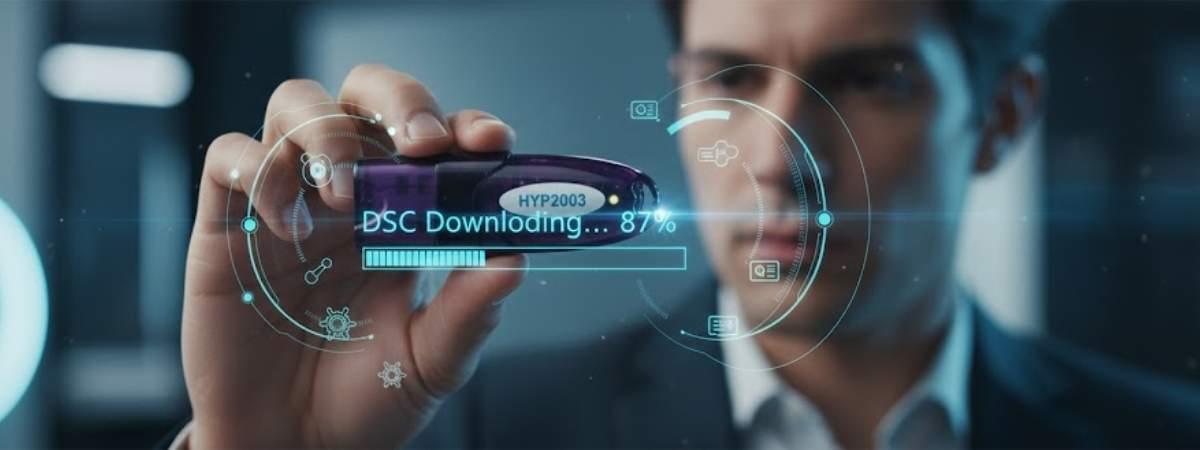
Complete Guide to Digital Signature Certificate (DSC) – Everything You Need to Know (2026 Edition)
Introduction: The Bedrock of India’s Digital Economy
The year 2026 marks a pivotal point in India’s “Digital India” journey. What began as a transition toward paperless filing has evolved into a mandatory digital ecosystem where identity theft protection and non-repudiation are paramount. Whether you are a small business owner in a tier-2 city or a Director of a multinational corporation, the Digital Signature Certificate (DSC) is your most critical asset for legal and financial compliance.
In an era of sophisticated cyber threats, a simple password is no longer enough to secure high-value transactions. From the Ministry of Corporate Affairs (MCA) to e-Procurement portals and Income Tax filings, the DSC serves as the gold standard for verifying that the person signing a document is indeed who they claim to be.
This guide is designed to be the ultimate resource for 2026. We will dive deep into the technical architecture, the nuances of Class 3 certificates, and provide a “troubleshooting bible” for common errors that halt business operations.
What is a Digital Signature Certificate (DSC)?
A Digital Signature Certificate is an electronic “credit card” that establishes your credentials when doing business or other transactions on the Web. It is the digital equivalent of a handwritten signature or a stamped seal, but it offers far greater security.
👉 🔗 Read detailed guide:
Class 2 vs Class 3 DSC
How DSC Works: The Science of PKI
To understand DSC, one must understand Public Key Infrastructure (PKI). This technology uses two different keys:
- The Private Key: Stored securely in your USB token. You must never share this. It is used to “sign” the data.
- The Public Key: This is part of the certificate and is shared with the recipient (or the government portal) to “verify” the signature.
When you click “Sign” on a document:
- The software creates a “hash” (a unique mathematical summary) of the document.
- This hash is encrypted using your Private Key.
- The result is a digital signature.
- If even a single comma is changed in the document after signing, the hash will not match, and the portal will reject the document as “Tampered.”
Legal Validity: The IT Act, 2000
Under Section 2 to 15 of the Information Technology Act, 2000, digital signatures are legally at par with handwritten signatures. In fact, for many government filings, a physical signature is no longer accepted. In 2026, the legal weight of a DSC is absolute in Indian courts.
Types of Digital Signature Certificates
In previous years, there were Class 1 and Class 2 certificates. However, to enhance security, the Controller of Certifying Authorities (CCA) has streamlined the categories.
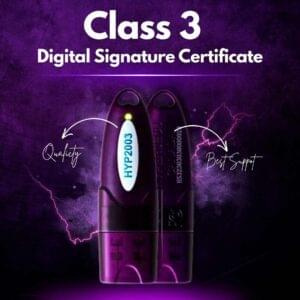
1. Class 3 DSC (The Gold Standard)
In 2026, Class 3 is the only class issued for most purposes. It provides the highest level of assurance.
- Verification: Requires physical or video verification.
- Usage: Mandatory for E-Tendering, Patent filing, MCA, GST, and Income Tax.
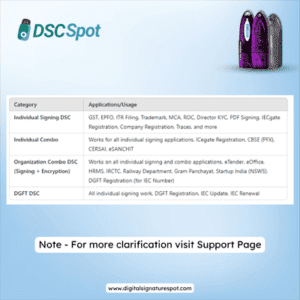
2. Individual vs. Organization DSC
- Individual DSC: Used for personal filings (e.g., an individual’s Income Tax return or a Director’s KYC).
- Organization DSC: Used when a person represents a company. The certificate contains the name of the individual AND the organization. This is crucial for GST Registration and Government Tenders.
3. Signing vs. Encryption
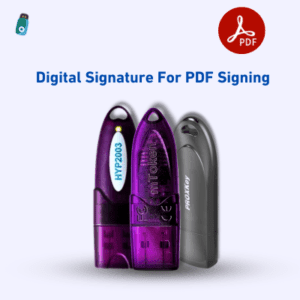
- Signing: Used for signing PDF, Doc, or portal forms.
- Encryption: Used to encrypt the document so that only the intended recipient can open it. In e-Tendering (e-Procurement), you often need a “Combo DSC” (Signing + Encryption) to ensure your bid remains confidential until the tender opening date.
Deep Dive: Where is DSC Used in 2026?
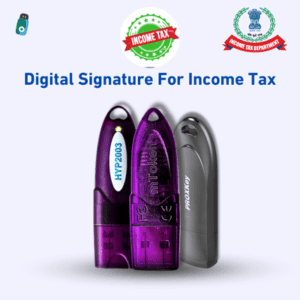
A. Income Tax (e-Filing)
For individuals whose accounts must be audited under Section 44AB, and for all companies, the DSC is mandatory for filing returns. It is also used for responding to high-value notices.
B. Ministry of Corporate Affairs (MCA – V3 Portal)
The transition to the MCA V3 Portal has made DSC even more vital. It is required for:
- Incorporating a Company (SPICe+ forms).
- Filing Annual Returns (AOC-4, MGT-7).
- Director KYC (DIR-3 KYC).
C. GST (Goods and Services Tax)
While GST allows Aadhaar OTP-based filing for some, Companies and LLPs must use a DSC for:
- Registration.
- Filing GSTR-1 and GSTR-3B.
- Revocation of cancellations.
D. DGFT & ICEGATE
Exporters and Importers require DSC for claiming incentives and for customs clearances via the ICEGATE portal.
👉 🔗 Related guides:
Detailed Step-by-Step: How to Buy and Apply
Gone are the days of waiting 7 days for a DSC. In 2026, the process is paperless and takes less than 30 minutes.
- Selection: Determine if you need “Individual” or “Organization” and “Signing” or “Combo.”
- Documentation:
- PAN Card (Scanned original).
- Aadhaar Card (For Paperless/eKYC).
- Mobile Number (Linked to Aadhaar).
👉 🔗 Full list:
Documents Required for Class 3 DSC
- eKYC Process: You will receive a link to perform Video Verification. You must hold your original documents in front of the camera and state your name and the code shown on the screen.
- Approval: Once the Certifying Authority (CA) like eMudhra, VSign, or XtraTrust approves the video, your certificate is ready for download.
Full process:
How to Buy Class 3 DSC Online
The “Master Class” on Installation & Troubleshooting
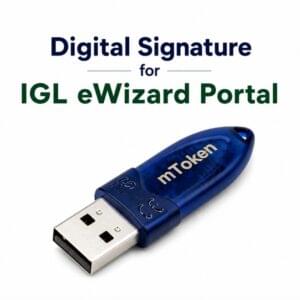
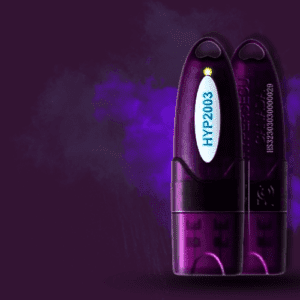
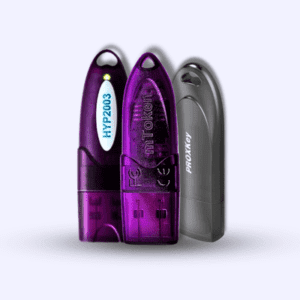
This is where most users get stuck. Setting up your USB Token (ePass2003 Auto, ProxKey, mToken) requires precision.
1. Token Initialization
When you receive your USB token, it is usually empty. You must use the CA’s Download Utility to fetch the certificate from the cloud and store it in the token.
- Pro Tip: Never lose your token password. After 10 wrong attempts, the token is permanently “Locked,” and you will have to buy a new one.
2. Browser Configuration (The 2026 Setup)
Portals like GST and MCA require a “bridge” software called emSigner.
- Java Runtime Environment (JRE): Ensure you have the latest version of Java installed.
- Host Settings: Add
https://127.0.0.1:1585to your browser’s “Trusted Sites” if emSigner fails to connect. - Edge/Chrome: Ensure “Allow invalid certificates for resources loaded from localhost” is enabled in
chrome://flags.
3. Common Error Resolution Table
| Error | Cause | Solution |
| “Token Not Found” | Missing Drivers | Reinstall ePass2003/ProxKey drivers from the “My Computer” drive. |
| “Certificate Expired” | Validity period over | Visit Digital Signature Spot for immediate renewal. |
| “Failed to establish connection to the server” | emSigner not running | Right-click emSigner and “Run as Administrator.” |
| “Pin Blocked” | Too many wrong attempts | Use a new token or contact support for a “Reset” if available. |
Frequently Asked Questions (FAQ)
Q: Can I have two DSCs for the same person?
Yes. You can have an Individual DSC for your personal Tax and an Organization DSC for your company work. They can reside on the same or different tokens.
Q: Is a soft copy of DSC available?
No. To prevent misuse and comply with CCA guidelines, DSCs must be stored on a FIPS-certified Cryptographic USB Token.
Q: How do I check the validity of my DSC?
Insert the token, open the Token Manager software, and click on “Certificates.” It will show the “Valid From” and “Valid To” dates.
Why “Digital Signature Spot” is the Industry Leader
We don’t just sell certificates; we provide Technical Peace of Mind.
- Expert Troubleshooting: Our team has 10+ years of experience in solving MCA and GST portal glitches.
- Global Reach: We serve clients across India and NRI directors abroad.
- Transparency: No hidden costs. The price you see is the price you pay, including the token and shipping.
Contact Information:
Ready to secure your digital identity?
- Website: [Digital Signature Spot]
- Phone/WhatsApp: +91-7579984381
- Service Guarantee: Approved in 15 minutes.
Conclusion: Future-Proofing Your Business
As we move toward a more integrated digital economy, the Digital Signature Certificate will evolve into a multi-purpose tool for everything from property registration to international trade. Staying updated with the latest token drivers and renewal timelines isn’t just about compliance—it’s about ensuring your business never stops moving.
Trust the experts at Digital Signature Spot to guide you through the complexities of digital authentication. Get your Class 3 DSC today!
About the Author: Samarth is a recognized authority in the Digital Signature landscape. As the founder of Digital Signature Spot, he has pioneered simplified DSC issuance processes, making high-level encryption accessible to every Indian professional.


About author



Add comment