


How to Apply for a Class 3 Digital Signature Certificate: The 10-Minute Expert Guide (2026)
1. Introduction: Why Your Digital Identity Needs the Class 3 Upgrade
How to Apply for a Class 3 Digital Signature Certificate” In today’s regulatory environment, the digital signature is your secure handshake with the government and business world. If you are an entrepreneur, professional, or corporate signatory, you are likely here because you need to apply for a Class 3 Digital Signature Certificate (DSC).

- Brief Context: A DSC is mandatory for secure online transactions where non-repudiation (proof that you signed it) is critical.
- Why You’re Searching: Class 3 is the standard requirement for high-value and high-risk activities like e-Tendering, MCA filings, and GST registration. You need a fast, error-free path to get certified.
- Importance: Class 3 is the highest-level certificate, legally recognized and designed for the maximum level of security and compliance in India.
2. What Does ‘Apply Class 3 Digital Signature Certificate’ Really Mean? How to Apply for a Class 3 Digital Signature Certificate
When you ‘apply’ for a Class 3 DSC, you are requesting a licensed Certifying Authority (CA) to verify your identity and issue a unique digital key pair stored on a hardware device.
- Detailed Definition: It’s an application for a cryptographic certificate that binds your verified public key with your identity (Individual or Organization) after stringent validation, including face-to-face or video verification.
- Technical Overview: The application results in two files: a Public Key (embedded in the certificate for others to verify your signature) and a Private Key (secured on your USB Token, used only by you to create the signature).
- Relation with DSC Ecosystem: The CCA (Controller of Certifying Authorities) mandates CAs to issue Class 3 DSCs due to their superior security model, effectively making the older Class 2 obsolete for major filings.
💡 My 10+ Year Experience Insight: I’ve seen the digital signing world evolve from paper-based applications to the 10-minute eKYC process we use today. The process is quicker than ever, but precision in the application is key to avoiding delays.
3. Why Applying for a Class 3 DSC is a Requirement (Not an Option)

The Class 3 DSC is the essential digital proof demanded by regulatory bodies to confirm the identity and integrity of the documents submitted.
| Business Use Case | Compliance/Portal Requirement |
| E-Tendering / E-Procurement | Mandatory for online bidding, bid encryption, and document submission on platforms like GeM, NIC, and state e-Tender portals. |
| MCA / ROC Filings | Mandatory for Directors/Authorised Signatories filing annual returns, incorporation documents, and all statutory forms with the Ministry of Corporate Affairs (MCA21). |
| GST Filings | Mandatory for authorized signatories of companies/LLPs to sign GST returns (GSTR-3B, GSTR-1, etc.). |
| ICEGATE / Customs | Mandatory for Customs House Agents (CHAs) and Importers/Exporters filing documents on the ICEGATE portal. |
| Income Tax e-Filing | Mandatory for audit cases and all high-volume filings by professionals. |
4. Eligibility & Pre-Requisites
Who Can Apply?
The application type depends on the usage:
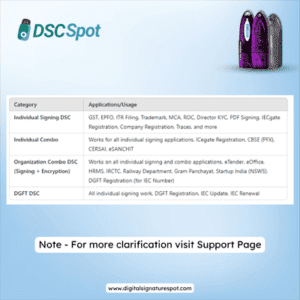
- Individual: For personal tax filing, signing documents, or serving as a Director/Partner.
- Organizational: Issued to an authorized representative (like a Director or Partner) on behalf of a Company, Firm, or LLP for corporate filings.
Document Checklist (For Indian Individual DSC – Paperless eKYC)
The process is almost entirely paperless if your mobile number is linked to your Aadhaar.
| Document Type | Requirement | Notes |
| Identity Proof | Scanned Copy of PAN Card | Mandatory for PAN-based certificates. |
| Address Proof | Scanned Copy of Aadhaar Card | Used for eKYC; details must match the application form. |
| Photo | Passport Size Photo (Soft Copy) | |
| Contact | Valid Email ID and Mobile Number | Essential for OTPs and Video Verification link. |
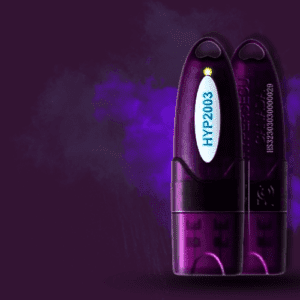
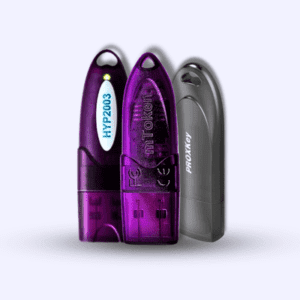
| Hardware | USB Crypto Token (e.g., ProxKey, ePass) | The final certificate is securely stored here. Ensure you select the option with the token during application if you don’t already own one. |
5. Step-by-Step Guide for Applying Class 3 Digital Signature Certificate
The modern application process is fast, simple, and typically completed in less than 30 minutes online.
- Select CA and Plan: Choose a licensed Certifying Authority (CA) or their trusted partner. Select Class 3 and choose your required type: Sign Only or Sign & Encrypt (Combo), and the validity (2 or 3 years).
- Fill Online Form: Complete the application with details matching your PAN and Aadhaar. Ensure zero spelling mistakes.
- Submit Documents & Payment: Upload the required soft copies (PAN, Aadhaar) and complete the payment.
- Mobile/Email Verification: You will receive OTPs on your registered mobile and email to confirm your contact details.
- Video Verification (V-SAT): This is the mandatory identity proof for Class 3. You will receive a link to record a short, live video (10-20 seconds) on your phone or computer, where you state the application ID and confirm your identity/intent.
- CA Approval & Issuance: The CA verifies your application against the documents and video. Once approved (usually within hours), you receive an SMS/Email notification.
- Download to Token: Insert your USB token, install the token driver, and use the provided utility (via a challenge code/application ID) to securely download the certificate onto the token.
6. Pricing, Validity & Cost Factors
The cost of applying for a Class 3 DSC is transparent and mainly depends on three factors:
- Validity Period: 2-year and 3-year options are available. The 3-year option is generally the most cost-effective.
- Certificate Type: A Combo (Sign + Encrypt) certificate is typically slightly more expensive than a Sign Only certificate but offers maximum utility.
- USB Token: The price should include the mandatory FIPS-certified USB Crypto Token (e.g., ProxKey or ePass 2003).
💰 Expert Pricing Note: Expect a 2-year Class 3 Individual Combo DSC (including the USB token) to be in the range of ₹1,800 to ₹3,500 (plus GST), depending on the CA and service provider. Always confirm the price includes the token and all verification fees.
7. Portal-Specific Integration
Your DSC is useless if it doesn’t work on the government portals. Here’s a quick guide to portal integration:
| Portal | Registration Steps & Utility |
| MCA / GST | Requires installation of the emSigner utility. After logging in, you must use the portal’s service to register the DSC with your account’s PAN/GSTIN. |
| E-Tendering | Often requires the Java Runtime Environment (JRE) and a specific Applet/Client Software provided by the tender platform. Browser settings (like adding the site to Trusted Sites) are frequently needed. |
| Income Tax | Requires the emSigner utility. Register the DSC under your ‘My Profile’ section after logging in. |
8. Common Errors in the Class 3 Application and Fixes
| Error / Issue | Cause & Fix (My Top 3 Application Mistakes) |
| “Verification Failed: Document Mismatch” | Cause: Name or Date of Birth on the application form does not exactly match the PAN/Aadhaar document. |
| “Video Verification Rejected” | Cause: Poor lighting, audio, or applicant failed to clearly speak the script and display the ID proof. |
| “PAN Not Found in Database” | Cause: The name on the PAN record is incorrect (rare) or the applicant entered the number wrong. |
9. Advanced Troubleshooting (Post-Application/Usage)
- Token Not Detected: Install the correct manufacturer’s driver for your USB token (e.g., ProxKey, Watchdata). Always try a different USB port.
- “Certificate Chain Validation Failed”: This error means your system doesn’t trust the CA that issued your DSC. Fix: Re-install the DSC token utility, which usually installs the necessary Root and Intermediate certificates (the ‘Chain’).
- emSigner/Java Error: Ensure the emSigner utility is running in the background and that you are using the correct version of Java (if required by the portal).
10. Comparison: Class 2 vs Class 3 & Signing vs Encryption
| Feature | Class 3 DSC (Recommended) | Class 2 DSC (Discontinued/Obsolete) |
| Security Level | Highest Assurance (Mandatory Video/Physical Verification) | Moderate (Verification against database) |
| Usage | E-Tendering, MCA, GST, Legal, All Statutory Filings | Only used where explicitly permitted (rarely now). |
| Recommendation | Always Apply for Class 3. | Avoid. |
- Signing DSC: Used to apply your legal digital signature to a document.
- Encryption DSC: Used to encrypt confidential documents (e.g., financial bids in a tender) so only the intended recipient can open them.
- Combo DSC: Includes both Signing and Encryption certificates on the same token. This is the most common and recommended choice.
11. Security & Compliance Guidelines
- Protect Your PIN: The PIN/Password for your USB token is your digital key. Change it immediately from the default and never share it.
- Unplug When Done: Always physically remove the USB token when you are finished signing or filing documents.
- Software Updates: Keep your token drivers and portal utilities (like emSigner) updated to ensure security and compatibility.
12. Expert Tips for Faster Approval
- Mobile/Aadhaar Link: Before applying, double-check that your current mobile number is linked to your Aadhaar. This is the single biggest factor in fast, paperless approval.
- Perfect Video: Record your video verification in a well-lit environment with a plain background. Speak clearly and hold your documents still.
- Choose Combo: If you’re a business or professional, choose the Class 3 Sign & Encrypt Combo from the start. It saves you the hassle of applying for a second certificate later.
13. FAQs about Applying Class 3 DSC
| Q | Answer |
| What is the processing time? | With paperless eKYC, the DSC can be issued in as little as 1-3 hours after successful video verification. |
| Can I renew my expired Class 3 DSC? | No. Once expired, you must submit a fresh new application (re-apply). Renewal is only possible before expiry. |
| Do I need a new token? | If you are applying for the first time, yes. If you already have an active, compatible USB token, you can select the ‘Without Token’ option during the application. |
| What is the maximum validity? | 3 years is the maximum validity period allowed by the CCA. |
14. Conclusion
Summary
To navigate government and commercial filings seamlessly in India, you must apply for a Class 3 Digital Signature Certificate. The process is quick, secure, and fully online, provided you follow the documentation and video verification steps precisely.
Final Recommendation
Don’t delay. Start your application today by selecting the Class 3 Sign & Encrypt Combo for 3 years validity from a reputable, licensed CA partner.
15. Call to Action
Ready to secure your digital future and complete your compliance filings without friction?
➡️ [Click Here to Apply for Your Class 3 DSC Now!]
- Get a 3-year Class 3 (Sign + Encrypt) certificate and USB Token. Buy Now
- Instant online application and video verification support.
Need Immediate Assistance? 💬 [WhatsApp us your query for 1:1 expert support]


About author




Add comment