

Digital Signature vs. Electronic Signature: Key Differences Explained (2026 Guide)
Introduction
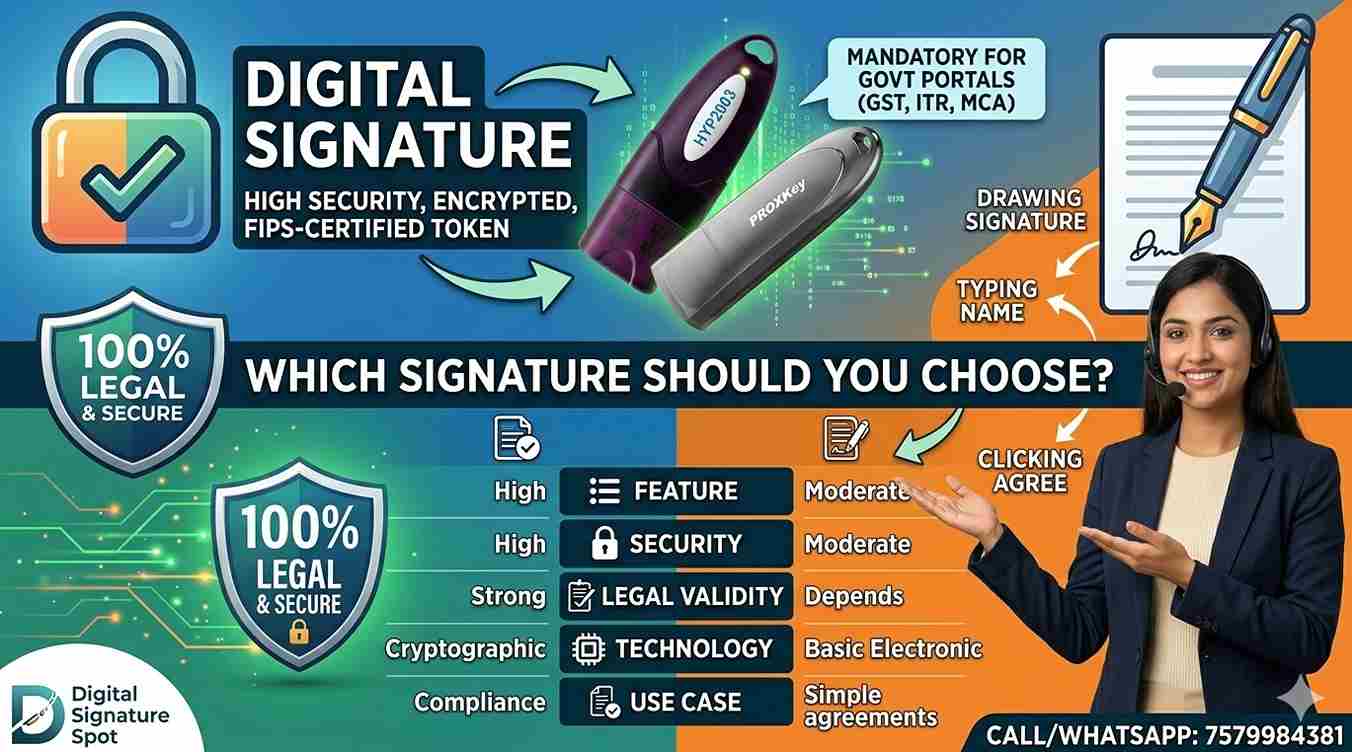
Digital Signature vs. Electronic Signature: Key Differences Explained (2026 Guide): As the world moves toward a paperless economy, the terms “Digital Signature” and “Electronic Signature” are used every day. While they may sound identical, they represent two very different levels of security and legal standing.
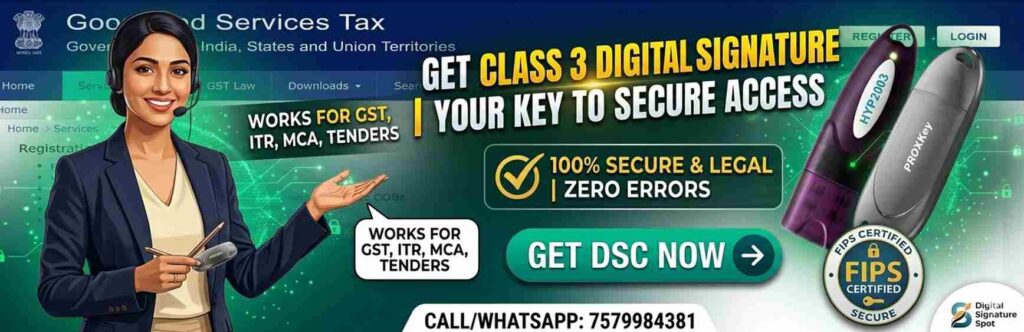
In India, choosing the wrong one could lead to your documents being rejected by government portals like GST, Income Tax, or MCA. In this guide, we break down the Digital Signature vs. Electronic Signature debate to help you choose the right solution for your business.
What is an Electronic Signature (eSignature)?
An Electronic Signature is a broad, “umbrella” term. It refers to any electronic sound, symbol, or process attached to a record and executed by a person with the intent to sign.
Common Examples:
- A scanned image of your handwritten signature.
- Typing your name at the bottom of an email.
- Clicking an “I Accept” button on a website.
- A signature drawn on a tablet or smartphone.
The Reality: While convenient, basic electronic signatures often lack strong encryption and can be easily challenged in a court of law if the signer claims they didn’t actually perform the action.
What is a Digital Signature (DSC)?
A Digital Signature is a specific, technically advanced type of electronic signature. It is backed by Public Key Infrastructure (PKI) technology, which provides a digital “fingerprint” that is unique to the signer.
In India, a Digital Signature is issued as a Digital Signature Certificate (DSC) by a licensed Certifying Authority (CA).
Key Security Features:
- Message Integrity: Ensures the document has not been altered after signing.
- Non-Repudiation: The signer cannot later deny signing the document.
- Authentication: Strictly verifies the identity of the signer via Aadhaar or PAN.
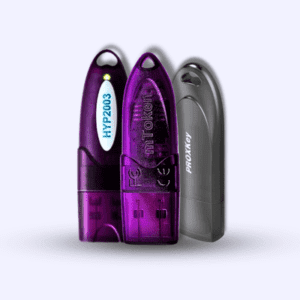
- Hardware Storage: Stored in a secure, FIPS-certified USB Crypto Token (like HYP2003 or ProxKey).
Digital Signature vs. Electronic Signature: Comparison Table

| Feature | Electronic Signature | Digital Signature (DSC) |
| Purpose | To show intent to sign. | To secure and authenticate a document. |
| Security | Basic; depends on the platform. | High; Uses cryptographic encryption. |
| Verification | Often just an email or IP address. | Strict; Verified by a Certifying Authority. |
| Tamper Evidence | Usually none. | Permanent; Any change breaks the signature. |
| Legal Standing | Accepted for private contracts. | Strong; Equivalent to a physical signature. |
| Mandatory For | Internal company approvals. | Govt Portals (GST, ITR, MCA, Tenders). |
Legal Validity in India
Both types are recognized under the Information Technology Act, 2000, but their applications are strictly divided:
- Electronic Signatures: These are generally used for HR onboarding, NDAs, and low-stakes business agreements.
- Digital Signatures: These are legally mandatory for all statutory filings in India. If you are submitting a government tender or filing company audits, a basic eSignature will not be accepted.
Which One Should You Choose?
Choose a Digital Signature (DSC) If:
- You are filing GST, Income Tax, or MCA returns.
- You are participating in Government eTenders.
- You are an Exporter/Importer (DGFT).
- You require the highest level of legal “tamper-proof” evidence.
Choose an Electronic Signature If:
- You are signing an internal office memo.
- You are approving a simple purchase order.
- You need a quick, informal signature from a client for a non-legal document.
How to Get a Secure Digital Signature (DSC)
Since a Digital Signature requires identity verification and a physical USB token, it cannot be “generated” like a simple image. It must be issued by an expert provider.
At Digital Signature Spot, we simplify this technical process:
- ✅ Class 3 DSC Issuance: The current gold standard for all Indian portals.
- ✅ Fast Verification: 100% paperless Aadhaar/PAN based process.
- ✅ FIPS Tokens: We provide genuine HYP2003 and ProxKey tokens.
- ✅ Expert Setup: We assist with driver installation and browser settings.
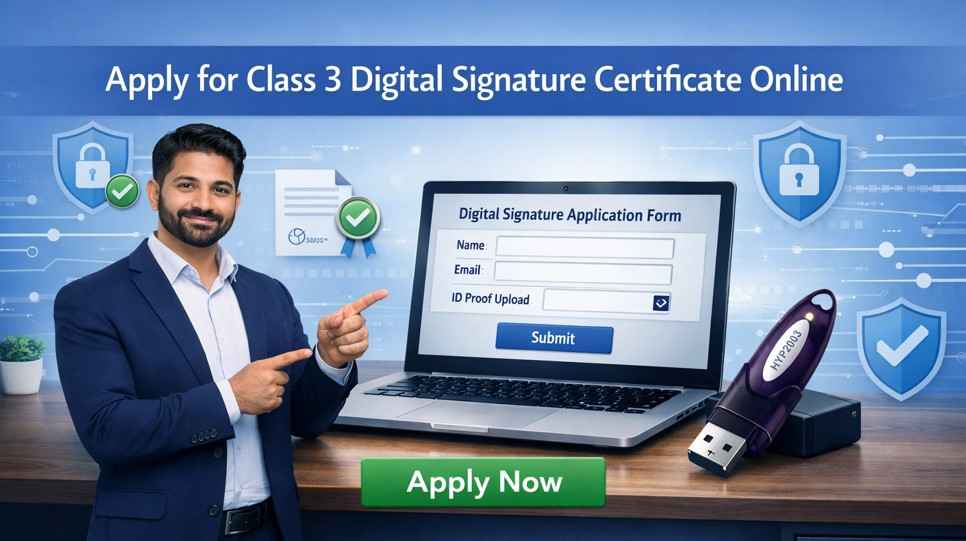
🔗 Apply for Your Class 3 DSC Today: Digital Signature Spot – Official Portal
📞 Consult an Expert: +91-7579984381
Frequently Asked Questions (FAQ)
Q1. Are digital signatures and eSignatures the same?
No. A digital signature is a highly secure, encrypted type of electronic signature that requires a certificate (DSC).
Q2. Can I use a scanned signature for GST filing?
Absolutely not. The GST portal only accepts a Digital Signature Certificate (DSC) registered via the emSigner utility.
Q3. Is a USB token mandatory for a Digital Signature?
Yes, in India, the private key of a DSC must be stored in a secure hardware device (USB Token) to prevent unauthorized copying.
About the Author:
Samarth is a Digital Signature expert and the founder of Digital Signature Spot. With over a decade of experience in the DSC industry, he helps businesses navigate the complexities of digital identity and government portal compliance.


About author








Add comment